Friday, June 12, 2009

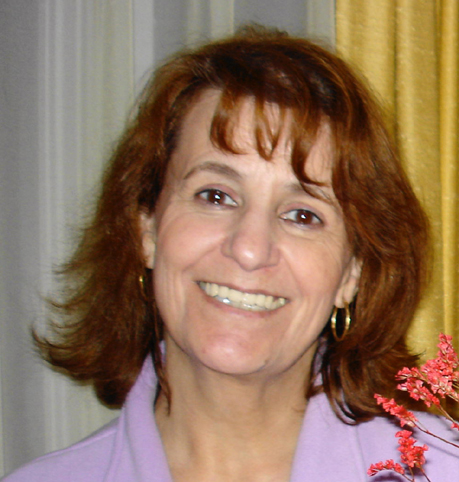
UPDATE ON MARI-LOLI'S ILLNESS by Maria Carmela Saraco


About Mari-Loli’s Illness

Mari-Loli’s full name is Maria Dolores, or Maria of Sorrows. And true to her name, Loli had indeed suffered for most of her life, the details of which would take many pages. Her final suffering was as follows.
On the 40th anniversary of Our Lady of Carmel’s appearance at Garabandal, Spain, July 2nd, Loli entered Massachusetts General Hospital in Boston and on the same day had biopsy surgery on her lungs. One cut was made under her breast, another cut under her arm and one on her back. She was diagnosed with pulmonary fibrosis which had been active for two years without anyone knowing. It was complicated by a very rare form of Lupus, an immune system disorder that she has had to endure for the last 15 years. There are many other health factors that entered into this, that I am not able to explain because I do not even understand them myself. However, it had been classified as “terminal.”
Rosaura (Sari), Loli’s sister who lives in Garabandal, had asked me to try to organize for Loli, 1 hour of rosary prayers, including Eucharistic Adoration of The Blessed Sacrament in the church at Garabandal, and wherever else it was possible. She also suggested that it be at the same hour worldwide.
This was done on Sunday, July 15th, Vigil of the feast day of Our Lady of Carmel, at the Hour of Mercy. Three to four PM was the designated time for every time zone.
Loli’s family are aware of the many prayers and Holy Masses that were offered on Loli’s behalf. They want everyone to know how grateful they are. Loli told me once that she was also praying to Mother Theresa. She treasured the little medals that Mother Theresa gave her when they met in 1988.
With much appreciation for whatever you have done in soliciting prayers for Loli.
GOD BLESS YOU… IN UNION OF PRAYERS, Maria Carmela Saraco

Thursday, June 11, 2009

Garabandal and the Priesthood I


PRIESTS
By Father Francois Turner, O.P.

According to Conchita, Our Lady stressed above all “devotion to the Blessed Sacrament and prayer for priests.” There is a correlation between the Eucharist and the priesthood, both in themselves and in the Messages of Garabandal.

The Council teaches that the fundamental function of the priest is to be minister of the Eucharist (Presb, Nos. 2 & 5).

The Blessed Virgin often spoke about priests to the visionaries. She said that if they met an angel and a priest, they should salute-venerar-the priest first, because he consecrated, while the angel did not.

The priests are also responsible for instruction, and that is why she told the girls to ask them the meaning of the word “sacrifice” which they did not understand (Memor, p. 23;G I, p. 164). This suggests that the Blessed Virgin was perhaps also hinting that a good priest is sacrificed, consecrated, “eaten”, as the Cure’ of Ars would say. If such is the case, we can understand why she so often talked about them, encouraging the girls to pray frequently for priests. She expressed a special concern for priests, notably in the Second Message, because if they do not give a good example and demonstrate qualities of leadership, some of the faithful might be tempted to venture on “the road to perdition.” Their task is to help us to live saintly lives, each of us in our own individual state of life and calling.This special concern of the Virgin, and of God who sent her, is absolutely positive. On July 20, 1963, Our Lord told Conchita, “May they make Me known to those who ignore Me, and may they make Me loved by those who know but do not love Me.”

The Second Message recommends us all to pray for priests, bishops and cardinals.

It is well known that the Virgin gave the visionaries the power to recognize priests in lay or military attire, thereby hinting that they were marked with an invisible “character” or “seal” as taught by Catholic theologians.

We are now able to understand why the visionaries treated priests with a special consideration, even thought some treated them badly or questioned them indiscreetly. For example the girls questioned the Blessed Virgin about them with an eagerness close to anxiety. No subject seemed to preoccupy them more, except their own vocation. Conchita once asked the Virgin if all priests were good, and she was quite surprised to receive a negative answer (G II, p. 57). Mari Loli often prays for them, especially for those who wish they were no longer priests. She went so far as to ask the Virgin in a locution, for a cross to carry for them. Whence came these thoughts and feelings of Mari Loli? She confided once to a priest, “The Blessed Virgin told me to make sacrifices for priests, because if there are
many saintly priests, many more souls are led to Christ and to love God.She told me to pray especially for those who want to abandon the priesthood…that a priest continue to at least celebrate Mass, because he is priest forever.” The notion of the indelible “character” of the priest is found anew in these last words.

In order to let guests use her beds, Conchita’s aunt, Maximina, had put her two boys-aged five and four, on a straw mattress laid on the floor. In order to hide it, she had surrounded the mattress with chairs covered with sheets. Conchita entered the house in ecstasy, crossed the beds, and left. She went down a few steps, her head drawn way back, her hand holding the crucifix. She began to laugh, seemed to speak to someone, then came back,
walking up the steps backwards, reached the spot where the children were hidden, removed a chair, knelt and, without looking at the little boys, uncovered their feet, crossed them and said to one of them: ”Oh! … This one will be a priest?” This was seen and heard by many people amongst whom was Maximina who does not hide the confusion she felt at that time, whenever she narrates this episode (LVP, p. 122).

A pious, ascetic priest was Conchita’s first confidant regarding the miracle of the Host, and she notes his name in her Diary: Fr. Jose’ Ramon Garcia de la Riva. Another priest who was reputed to be saintly, Fr. Luis Andreu, S.J. was the only person to see the great Miracle beforehand, except Padre Pio, and the only one except the visionaries to see the Blessed Virgin at Garabandal.

At the time of the apparitions they often counted the priests who came to Garabandal and looked at the friars’ habits. When they were asked whom they would prefer to see coming, they answered “the priests”. Many came from the villages of the district. At the beginning, Pepe’ Diez counted as many as fifty. They discussed the events heatedly, even in public. They were far from seeing eye to eye. The girls were very sensitive to the way the priests celebrated Mass, and they noticed that the Andreu brothers said it very well.

After the time of the apparitions it was possible to observe that this lesson on priests had been fully assimilated by the visionaries.

At Burgos in 1966-67 Conchita often spoke of the priests and would pray that they try to be saintly. During her holiday at Garabandal on July 29, 1967, Conchita jotted down for a priest from Melun in France, on three pages of her notebook, what we consider is a little charter for the priests of our time. Rather than a revelation from Heaven, we see it as the fruit of her
reflections on the priesthood.

What the Blessed Virgin wants from the priest first of all is his own sanctification.

He should fulfill his vows through *love of God, and lead many souls to Him through example and prayer, for in our time it is difficult otherwise.

May the priest be sacrificed through love of souls in Christ!

May he retire from time to time in silence to listen to God who speaks to him continually.

May they think a lot about the Passion of Jesus so that their lives be more united to Christ the priest and thus invite souls to penance and sacrifice, and also make more tolerable to them the cross that Christ sends to us all.

To speak of Mary who is the surest one to lead us to Christ, and also speak about and cause people to believe that there is a heaven, so too there is a hell.

I believe that is what Heaven wants of the priests.

----Conchita
*The author has a facsimile of the original, from which the translation was made;Conchita underlined the word love.
At Burgos, Conchita wrote: “Let us pray much for priests who are the salt of the earth and the beloved of Christ.
---Conchita Gonzales, November 15, 1967”
A year later in October 1968, she was asked by a theologian if she still thought that “many priests were on the road to perdition.” She answered that she did, and that to those priests she would say: Imitate Christ in the Eucharist. This sounds theologically excellent, as Jesus in the host is perfectly consecrated to God and entirely eaten by men.

Of the many things the Blessed Virgin said, Jacinta remembers most vividly her words about priests: “I think that this was what impressed me most of all, and it leaves in my soul an esteem and a veneration for them that I am at a loss to explain.”

On November 21, 1968, a group of visitors was taking leave of Mari Loli. They told her that they were going to pray for her at the pines. She protested and told them to pray first for priests.

In December 1968, Conchita was operated on for appendicitis. While under anaesthetic she was heard to say, “We must pray for priests…let us pray for priests…how we must pray for priests!” which shows it was one of her major preoccupations.

In the Autumn of 1969, in an answer to a question sent to her, she explained that Our Lady asked her and her companions to pray for priests…because the faithful would follow their example.

In 1970 Mari Loli wrote to an author of books on Garabandal that she would “ask the most Holy Virgin that you be a holy priest.”

The frequent visits to Conchita by the Virgin, her numerous retreats, her life of prayer, her deep intuitive intelligence, perhaps a special charismatic gift, gave her the ability to provide profound and judicious answers. Mr. Walter J. Kushion and a group of Irish visitors asked her on September 13, 1970, “Why are priests leaving the Church today?” She replied, ”Because they do not have a love for the Blessed Virgin.” Whoever loves Mary faithfully, loves her Son faithfully and the Church that He loves (Eph. 5:25). Conchita considers that we are all responsible: “Let us pray a lot for priests. We ourselves are to blame for many priests who are on the road to perdition, because we do not pray enough for them, because we do not sacrifice ourselves, and also because we should be giving an example to those priests who are consecrated to the Blessed Virgin… We have to help those priests…that they may rise and pursue their course” (message of August 7, 1971 to American Garabandal workers, in OL, p. 221). Other such words and writings could be quoted.

This prayer for priests became contagious, particularly in the village when Conchita’s aunt and godmother, Maximina, began to pray daily for priests.

Since she learned that the Blessed Virgin asked us to pray for priests, SeƱora Julia Mazon, Mari Loli’s mother, has never spent a day without praying for them, for their sanctification, while milking the cows or when she takes the animals to graze. She declared this to Mrs. Maria Carmela Saraco who published it in her periodical The Vigil.

This example is followed to a great extent in the United States where friends of Garabandal promote vigils of prayer for priests, and adoration of the Blessed Sacrament. The Holy Father [Pope Paul VI] knew of and approved them.

Through his sacerdotal prayer (John 17), Jesus meant to consecrate his apostles for a ministerial priesthood:

“Consecrate-hagazio (set apart for a sacred purpose)-them through Thy truth: Thy word is truth. As Thou has sent Me into the world, even so have I also sent them into the world. And for their sakes I consecrate Myself, that they also may be consecrated through the truth” (John 17:17-19). As underlined in a note on these verses in the Ecumenical Translation of the Bible into French, to ‘consecrate’ or ‘sanctify’ a being is tantamount to separating it from the profane to introduce it entirely and forever into God’s sphere of existence.

The apostles were thus fully conformed to Jesus, Priest and Victim of the new cult of the New Covenant, “in truth” (John 4:23-24), that is to say in conformity with the divine revelation given by Jesus. That is also to say: in Jesus, Truth (see John 14:6), through the operation of “the Spirit of Truth who will guide them into all truth” (John 16:13).

This consecration of the apostles to the ministerial priesthood of the New Covenant receives a compliment at the end of the gospel: “As My Father has sent Me, even so send I you.” And when He had said this, He breathed on them and said: ”Receive ye the Holy Spirit. Whose ever sins you remit, they are remitted unto them” (John 20:21-23) 1

These ministerial priests will have successors who receive “a gift-charisma-of God by the laying on of hands” (II Tim. 1:6), conferred by the College of Presbyters:

“Reading, preaching, instruction, let these be thy constant care” wrote St. Paul to Timothy. “Do not neglect the gift that is within thee, which was given to thee by prophecy with the laying on of the hands of the presbytery…Continue in these things: for in doing this thou shalt both save thyself and them that hear thee” (I Tim. 4:13-16).

The priests are “ministers of Jesus Christ, with God’s gospel for their priestly charge, to make the nations an offering worthy of acceptance, consecrated by the Holy Spirit” (Rom. 15:16). This verse indicates the end, the goal of the ministry of the New Covenant.

Such is the teaching of the Council: “God … wanted … to consecrate priests who would share Christ’s priesthood in a special fashion… Through the celebration of Mass, they offer sacramentally Christ’s sacrifice” (Presb, No. 5).

This ministerial priesthood differs in essence and not only in degree from the common priesthood of the faithful (LG,No. 10).


“Set apart for God’s gospel (Rom. 1:1) …, they are totally dedicated ‘to the work to which’ the Lord ‘calls them’ (Acts 13:2)” (Presb, No. 3).
1.Cf A. Feuillet, Le Sacerdoce du Christ et de ses Ministres, Edit. De Paris
1971, pp. 177-188.
2.That is to say by those possessing charismatic gifts speaking in the name
of God under the guidance of the Spirit 

Wednesday, June 10, 2009

Padre Pio Connection V


CONVERSION AND CURE
The accident that blinded Joey in 1947 flung his family into poverty. For seven years they lived, for the most part, on the charity of neighbors and friends. Fortunes changed in 1954 when Joey and his brothers were offered a business venture. Through Joey’s natural business acumen, a lot of hard work and perseverance on the part of everyone in the family and- Joey believes-God’s blessings, the business paid off.

Now, in 1961, Joey was 31, financially successful, and much overworked. On doctor’s orders he took a vacation trip to Europe, where he stayed with relatives in Bari, Italy. While there, his uncle persuaded him to visit San Giovanni Rotondo, the monastery home of Padre Pio, 75 miles away in Foggia.

Reluctantly, for he just wasn’t interested, Joey went to Foggia, arriving in time for the 5 a.m. Mass celebrated by the famous stigmated priest. After Mass, Joey and his uncle knelt with many other men for the Padre’s blessing. When he came to Joey, Padre Pio called him by name, touched him on the cheek and blessed him. That was all. And yet it was everything, for it crystallized all that Joey heard and sensed during this brief stay at the Rotondo-the great affection of the people for this priest, and his extraordinary holiness. For two years afterwards, Joey couldn’t get the presence of Padre Pio out of his soul.

In going to Foggia, Joey had made a tiny opening in his heart for God. Grace had entered and begun the transforming work. Mass and the Sacraments were still only occasional events in Joey’s life, but now he was experiencing the turbulence of conversion. He began to have lights of understanding-about his blindness and the family hardships that had weighed so heavily on him. He began to understand why the financial comfort he’d dreamed about, struggled for, and attained hadn’t brought the joys or peace he’s thought it would. He began to fathom the emptiness.

When Joey returned to Italy in 1963, it was specifically to be again in the presence of that holy man whose seemingly simple blessing had wrought such wonders in his soul.

On the third day of this second visit to the Rotondo, Joey knelt for confession. There was no partition between him and Padre Pio, who grabbed him by the wrist and said, “Joey, confess yourself.” Stunned by this face-to-face encounter, Joey couldn’t speak right away. The Padre said again, “Joey, confess yourself.” Joey began:
“Bless me, Father, for I have sinned.”
…but the priest interrupted him.
“Joey, you’re angry, eh?”
“No, Father, I work hard, I’m tired…”
“No, no, Joey, you’re angry, eh?”
As Joey searched his soul for unclouded truths, Padre Pio raised his arm and said, “I call Jesus and Mary for you.” At that moment, which Joey recalls as though it were now, he understood that Padre Pio knew his soul. Joey says, “I felt deeply sorry for every sin I’d ever committed, and I understood that God knew this and Padre Pio knew this, and that I was being absolved of all.”

The Padre touched Joey’s lips, made him kiss the stigmated hand, caressed him and said, “Joey, a little patience, a little courage and you’re going to be all right.”

A few days later, Joey knelt with about 50 other men outside the cloister in the Rotondo waiting for Padre Pio to pass by. Suddenly, Joey threw his arms up and plunged backward to protect himself from what he thought, in his darkness, was an explosion. Actually, it was a scent-of roses. But Joey had had no sense of smell for so long that the sensation suggested an explosion to him. Suddenly Padre Pio was next to him and had grabbed him by the arm: “Joey, don’t be afraid.”

Though his olfactory nerve had been severed 16 years earlier in the accident that took also his eyes, Joey had regained his sense of smell. He has no physical faculty to smell, but his sense of smell is as acute as anyone’s-by the grace of God working through Padre Pio.

THE BIG QUESTIONS-AND THE BIG ANSWERS
The friend who had accompanied Joey to San Giovanni on this trip had done so with the understanding that after a week or so the two would go to Garabandal. While Joey’s friend was interested in these reported apparitions, Joey knew nothing of them and, besides he only wanted to stay at San Giovanni where he could be near Padre Pio. Joey persuaded his friend to put the matter before Padre Pio and accept whatever the Padre would say. Joey asked the question:

“Father is it true that the Virgin Mary is appearing to four girls in Spain?”
“The answer was simply: “Yes.”
But Joey still wanted an out, and so he asked:
“Father, should we go to Garabandal?”
The answer again was simply: “Yes.”
And so with the assurance that these apparitions were of God, and following the instructions of Padre Pio, Joey Lomangino went to Garabandal. One would have to consider that day as a major turning point in God’s plan to reach men through the Garabandal event, for, through Joey, the message of Garabandal has spread to millions around the world; Our Lady’s kissed objects, through which she promised Jesus would work prodigies, have been widely distributed: and untold numbers of people have been renewed in the grace and peace of God.

EVERYTHING MUST LEAD TO THE BLESSED SACRAMENT
Between 1963 and Padre Pio’s death in 1968, Joey returned to San Giovanni three or four times each year. There is an interesting anecdote that made an important point to Joey.

During his visits to the Rotondo in 1963, Padre Pio was very affectionate with Joey. When Joey would kneel with the others for a blessing, the Padre would always come up to him especially. He would hug him warmly, give his customary tap on the cheek, and then bless him. But, when Joey returned in 1964, there was none of this. Joey felt the Padre was ignoring him. He missed the special attention, and he thought to himself: “Here I am; I’ve been a daily Communicant for over a year; I spend many hours every day praying, listening to records on the lives of the saints, giving conferences. Before, when I was nowhere, he paid attention; now that I’m doing the right thing he ignores me.”

It disturbed Joey enough to make him bring it up with Mary Pyle._ This woman told Joey that a year ago he “needed” that attention, and now he did not, for he had found the Blessed Sacrament and thus knew the source of true consolation. She suggested that perhaps Padre Pio was testing him-to make him wonder and find out for himself just how far he’d come. It made some sense to Joey, but the next day solidified it. As he knelt again among many others to await the blessing, the Padre this time came up to Joey, tapped his cheek and said, “Now you understand, eh?”

And Joey has come to understand more and more. In the beginning, people need a lot of consolation, and God provides it- often through other people. But the more they pray, the more they are drawn to find all that they need in Mass and Communion and the presence of God in the Blessed Sacrament. Joey recalls that at first he used to arrive at the Rotondo at 3 a.m. to make sure he had a seat up front for Padre Pio’s 5 a.m. Mass. Then he would scramble to get to the hall outside the sacristy and be first on line for the Padre’s blessing after Mass. But after a while he began to realize that the greatness of the moment was not in Padre Pio but in the Body and Blood, present and sacrificed on the altar. These graces would reach him no matter where he was in the Church; so, too, would the Christ-given power of the priestly blessing reach him-no matter where he was on line.

“SEE, JOEY…”
In 1969, after Padre Pio’s death, Joey went to Foggia and knelt before the Padre’s crypt to say the Rosary. He experienced a tremendous consolation, vivid in his mind even today, and yet difficult to describe. He felt the presence of Padre Pio, so real that it made Joey lift his hands in an attempt to touch him. At the same time that he felt this presence, Joey felt inside of him the knowing conviction that said, “See, Joey, we Christians never die.” It was a moment of inexplicable happiness for Joey, and he will never forget its impact on him.

When Joey meditates on Padre Pio, the words of Our Lady of Garabandal come quickly to his mind: “Pray much for priests that they be holy, for the faithful follow their example.” Joey thinks of Padre Pio’s great power as a priest-a power that is at the disposal of all priests; he thinks of how much he helped people in the confessional, in his ministering of the sacraments, and by the example of his obedience to and reverence for the Holy Father.

For himself, Joey remembers the inspiration provided him through Padre Pio, the inspiration that led him to put himself in the hands of God and thus to know, deep in his soul, that, having done that, God will take care of everything in and around him.

And Joey thinks, too, of Padre Pio’s words to him: “I will be at all your conferences, and I will bless the people.”


_. Mary MacAlpine Pyle was born in 1888 into an extremely wealthy, Protestant family in New York. She became a convert to Catholicism in 1918. In 1923 she met Padre Pio. Shortly afterward, she turned over her vast fortune to the Capuchin Fathers and set up a modest dwelling near the monastery at Foggia, where she remained until her death in 1968. Padre Pio was her confessor and spiritual director, and he accepted her into the Profession of Third Order Franciscan with the name of Sister Pia. For 45 years, she assisted, along with other territories, in the clerical and liturgical needs of the monastery. Her home was always open to visitors, and her humble holiness and joyful peace touched all who met her.


Monday, June 8, 2009

Padre Pio Connection IV


PADRE PIO, MARY, AND THE ROSARY
By Joseph A. Pelletier, A.A.

Padre Pio, the stigmatic Capuchin priest, was the first priest ever to bear the visible wounds of Christ in his body. This and other powerful charismatic gifts drew thousands of people each day to Padre Pio’s monastery in the village of San Giovanni Rotondo, near Foggia on the Adriatic coast of Italy.

A very great source of this saintly man’s exceptional spiritual power was his devotion to the mother of Jesus. It was second only to his devotion to the Eucharist which was manifested in a dramatic way through his ecstatic celebration of the Mass. Padre Pio’s Mass deeply moved all who were privileged to witness it.

HIS PARENTS WERE OUTSTANDING CHRISTIANS
The mind and heart of those destined by God for important missions are shaped by His grace as it works through human agencies, among which parents usually figure very prominently. So it was with Francesco Forgione, born in Pietrelcina near Benevento, Italy, on May 25, 1887, and later known by the name of Pio which he adopted when he entered the Capuchin branch of the Franciscan Order. His father Orazio and his mother Maria Guiseppa were outstanding Christians, poor in the things that the world esteems but rich in those that count with God.

Orazio and Maria Guiseppa recognized the hand of God on their son and, when he gave himself to the Lord and to St. Francis at the tender age of 11, Orazio told his son: “ I shall go and work in America. You will have books. I will be able to pay for your studies.”

Orazio went first to Buenos Aires from 1898 to 1905 to earn the necessary money. In 1910 he sailed again and until 1917 worked in New York and the Bay of Jamaica to defray the medical expenses that resulted from illness of the then Brother Pio. These were powerful lessons of self-sacrifice that would not be lost on the young man whom God had called to a special life of suffering.

From Maria Guiseppa, his mother, Francesco acquired those great twin loves of his life: the Eucharist and the mother of Jesus. The good Maria abstained from meat three times a week in honor of Our Lady of Mount Carmel, and she attended Mass on weekdays as frequently as she could.

So, we see again an example of the profound influence of parents on their children, a fact so often verified in the lives of the saints and which Our Lord reminded us of when He told us that good fruit comes from good trees (Matt: 7:16-20). Considering the example of his parents, we are not too surprised when we learn that young Francesco used to stop at the village church of Our Lady of the Angels to visit the Blessed Sacrament and to pray to Our Lady of Liberty, the special patroness of the area, or that he also prayed before images of Mary, St. Michael, and St. Anthony of Padua at a simple outdoor shrine near his humble home. Love of Mary and of the Eucharist would grow daily and at a parallel pace all during his life.

AN EXTRAORDINARY LIFE; FREQUENT VISIONS
Padre Pio’s life was so filled with the unusual and extraordinary that the modern critical mind has trouble with it. One could almost say that Padre Pio breathed the extraordinary, so habitual were these things in his life. And yet these facts that defy the imagination are well established and duly authenticated. They come to us from well-informed and reliable witnesses.

Special gifts of God manifested themselves very early in his youth and continued throughout his life. Before he was nine years old, he was enjoying frequent visions of Our Lady and the visible presence of his Guardian Angel. Diabolical manifestations also began to occur during his early youth and took on many forms over the years.

In 1911, when Padre Pio was 24 years old, he spent about 40 days, from October to December, in the Capuchin monastery in Venafro, a small provincial town of Isernia. He had been ordained on August 10 of the previous year and went to Venafro to study sacred eloquence under the guidance of Father Agostino of San Marco in Lamis.

Father Agostino had previously taught theology to the young Capuchin and had been his spiritual director and confessor for several years prior to his coming to Venafro. He would remain his spiritual director and confessor until he died in 1963, five years before the death of Padre Pio. THE DIARY OF FATHER AGOSTINO OF SAN MARCO IN LAMIS is one of our most authentic sources of information on the famed Capuchin stigmatist.

Padre Pio’s 40 days at Venafro were like a blueprint or capsule preview of much of his life. All kinds of unusual happenings and special spiritual gifts filled this short period. Father Agostino was an eyewitness to these events, including the diabolical attacks, and he describes them in his DIARY.

Among these extraordinary happenings was a mysterious, on-and-off illness that defied doctors. This complicated malady included very high temperatures, pulmonary infections, coughing, agonizing chest pains, upset stomach, very painful headaches, crises of acute and paralyzing rheumatism, and on one occasion his sight was so menaced it was thought that he might go blind.

At Venafro, as well as during much of Padre Pio’s life, there were manifestations of the devil, including severe physical beatings. But these appearances and molestations by the devil were richly compensated for by very frequent heavenly visions and ecstasies.

Padre Pio was able to live on the Eucharist alone without any other nourishment. At Venafro he stayed at least 20 days in this way. There, too, as later, he was given to know the hidden secrets of men, what they were thinking and the temptations they were enduring.

Father Agostino affirms that Padre Pio’s apparitions and ecstasies began in his early youth and were continual. Because they started so early in his life and were so frequent, Padre Pio took them completely for granted. When he was asked why he had kept them hidden for so long, he gave the surprising and candid answer that he thought they were quite ordinary things that happened to everybody.

Father Agostino adds that one day Padre Pio asked him very naively if he had visions of the Madonna. When he replied that he did not, the Capuchin stigmatist replied: “ You don’t want to admit it because of humility.”

According to Father Agostino, Padre Pio’s ecstasies took place two or three times each day and lasted from one to two-and-a-half hours. They generally occurred after the diabolical manifestations and consisted of visions of Jesus and Mary, of his Guardian Angel (who was rarely missing during any apparition) and of the Saints, among whom St. Francis occasionally figured. The visions that followed the attacks of the devil were to comfort, console, and one time even physically restore him.

During one of these ecstasies at Venafro, Father Agostino checked Padre Pio’s heartbeat and pulse. The heartbeat was exceptionally strong and rapid, as though the heart were about to burst. During the ecstasy, Padre Pio could be heard repeating: “ Lord, what’s the matter with my heart? Does it want to leave me? Take it, it’s Yours! I love You, I love You.”

Father Agostino’s observations were verified later by Doctor DeVincenzi, a physician from Pozzilli, during the final ecstasy at Venafro, December 31, 1911. The doctor was amazed to discover that Padre Pio’s heartbeat was not synchronized with his pulse. He was also enraptured by the beauty and vivacity of the monk’s countenance during the ecstasy.

CHARISMATIC GIFTS
Two other gifts, bilocation and prophecy, were first manifested on January 18, 1905, when Padre Pio was only 17 and still a seminarian at the Capuchin monastery of St. Elia a Pianisi. He described this manifestation in writing in February of that same year.

It happened at about 11 o’clock in the evening as he was praying in the choir of the chapel. He states that suddenly he found himself “at the same time in the palace of an extremely wealthy family” in the city of Udine. The owner of the palace was at the point of death, while his wife was about to give birth to a daughter. Our Lady appeared to Brother Pio at the palace and told him that she was entrusting the unborn child (actually born that very night) to his care and protection. He would be her spiritual director and it would be his mission to “shape and polish her” and make her into a “brilliant jewel.” When the humble brother asked how this could be possible since he was only a seminarian and not yet a priest, and in any event would be living far from the palace, Our Lady predicted that his spiritual daughter would come to him, but that at first he would meet her in the basilica of St. Peter in Rome. The young capuchin then states: “After that, I found myself back in the choir.”

What Our Lady foretold came about as she had announced, and this woman’s extraordinary case is presently being used in the cause of beatification and canonization of Padre Pio, the preliminary phase of which was initiated on November 23, 1969, just 14 months after his death (September 23, 1968). This particular incident of bilocation and prophecy also highlights still another of Padre Pio’s gifts, one very special to him, that of his spiritual paternity. He had many thousands of “spiritual sons and daughters” throughout the world. These were people who had asked him directly for this relationship, or who automatically attained it by becoming a member of the Blue Army of Our Lady of Fatima. Padre Pio prayed regularly for all his spiritual children. He told them to lead good lives and to pray the rosary, and he said for all of them, “I will see you in heaven.”

The exceptional gifts of Padre Pio mentioned above, and still others that manifested themselves later, were for the most part ministry gifts, bestowed on Padre Pio for the welfare of others. Thus, the visible stigmata and the fragrance that came from these wounds, the visiting of people in bilocation, the ecstatic celebration of the Eucharist, the reading of men’s minds and consciences, were all gifts for the welfare of the people who saw or heard these things or were otherwise involved in them.

In his DIARY, Father Agostino says that one day he questioned Padre Pio about his gift of discernment. His answer is very enlightening: “In the souls of others, I see clearly through the grace of God, but in my own I see only darkness.” Padre Pio had a spiritual director for his personal guidance all during his religious life. He leaned very heavily on him at first; later, as his soul was purified and enlightened and he gained experience, he was much less dependent upon him.

Some of the special gifts that Padre Pio received were specifically sanctifying gifts, such as the gift of prayer and contemplation. Also many of the apparitions of Our Lord, of Our Lady and of the Guardian Angel, though not directly sanctifying in themselves, were indirectly powerful aids to drawing Padre Pio closer to God. He was consoled and encouraged by them. He saw in them proofs of God’s love for him, and this nurtured the powerful sanctifying virtues of faith, hope and love.

For example, Our Lady appeared frequently to Padre Pio. She spoke with him and comforted him. He developed a tender love for her and invoked her with the words, “Mamma mia.” In a letter to Father Agostino, Padre Pio wrote that on that very morning his heavenly mother had lovingly accompanied him to the alter and that his heart had been filled with holy affection. “Poor little Mother, how much she loves he, “ he wrote.

HE PRAYED CONTINUALLY: THE CROSS AND THE ROSARY
The great gifts by which Padre Pio is so well known were not substitutes for the normal working of God’s saving grace. Like all of us, he needed the regular channels of grace- the Sacraments, scripture, the Mass and private prayer. In fact, his need for prayer was very great, in direct proportion to the greatness of his mission and of the gifts received for the fulfillment of that mission. Prayer was for Padre Pio, as for us, the means of obtaining God’s help for avoiding sin and practicing the Christian virtues.

Padre Pio was chosen by God to teach and to remind the world of the redemptive value of Christian suffering. That is the divine purpose behind his mysterious, life-long illness, the long years of molestation by the devil, the tedious hours in the confessional and the 50 years of atrocious pain in his hands and feet, his side, shoulders, and head. God chose him to remind a world which had come to shudder at the very thought of pain and suffering that man is expected to share in the sufferings of Christ, after the manner of St. Paul: “ In my own flesh I fill up what is lacking in the sufferings of Christ for the sake of His body, the Church” (Col. 1:24. See also II Cor. 4:10-11).

Continual prayer was vital to Padre Pio because of the continual crosses that he was called to carry. This began in his very early youth. When he was only six years old, he would leave home early in the morning to go to the mountain to pasture two sheep owned by the family. He went with another child of his age. Rather than play, as his friend wanted to do, he made little crosses with twigs of wood and planted them in the ground. The remainder of the time he spent reciting the rosary. The cross-in many forms- and the rosary. These would be the two most representative things of Padre Pio’s life.

The rosary was part and parcel of Padre Pio’s love for the mother of Jesus. He used this prayer to maintain and nourish his love of Mary. But he also used it as a most powerful intercessory aid for obtaining from God the help that he needed for himself and that he sought for others.

The saintly Capuchin’s love of Mary and constant recourse to her through the rosary was based on the teaching and recommendations of the Church, for which he always had the greatest respect, also on his sense of faith, which was a gift of the Holy Spirit. His love for his heavenly mother and his confidence in the power of her intercession grew daily through what one priest has called, “the reality test”- the proof of experience.

As one would expect from someone so filled with the love of Mary and so convinced of the power of the rosary, Padre Pio recommended both to all who approached him and particularly to his “spiritual children” who sought his very special protection and help. He sent them all to the mother of Jesus and told them to say the rosary every day.

Padre Pio’s example confirmed his words. He gave the example of private, personal use of the rosary, as well as public recitation of that prayer. Those who saw Padre Pio in what he called his free moments, as he walked from one place to another, will remember him holding the rosary to his breast and praying it as he walked. Father Eusebio of Castelpetroso, a Capuchin who was Padre Pio’s constant companion for five years, once decoyed him into revealing that on a particular day he had said 60 rosaries of 15 decades. It must be remembered that Padre Pio slept at the most two or three hours a night, never continuously, and often he never slept at all. The precise number of rosaries he said each day, of course, is not the point. The point is that he prayed the rosary continually in his free moments.

It was one of Padre Pio’s joys to officiate at the recitation of the rosary and Benediction of the Blessed Sacrament in the church. During the last years of his life when he could no longer officiate, he continued to attend faithfully, helped to the church by two brother Capuchins who supported him under each arm.

JESUS AND MARY
Padre Pio is a man of our day. He died but a few years ago. Father Pellegrino, who spent the last two-and-a-half hours of Padre Pio’s life in his room with him, says that the prayer “Jesus, Mary” was constantly on the lips of the dying stigmatist. These two words summarize his life.

As we study Padre Pio it becomes evident that the distinctive feature of his life was to recall to our modern world the redemptive value of suffering freely accepted and joined to that of Christ. A corollary lesson taught for our age by Padre Pio’s life is in the Father’s redemptive plan. The significance of this lesson is underscored by the fact that the American bishops, in November of 1973, and the pope, in February of 1974, have seen the need to issue major documents on Mary.

The vital link between Mary and Jesus can only be seen with the eyes of faith. Only the poor in spirit and the humble of heart like Padre Pio see it with any real clarity an act upon it with any consistency.

There was deep humility behind Padre Pio’s constant praying of the rosary. He knew that the great gifts that men admired so much in him were entirely from God and did not make him any better than his fellow men. He was very conscious of the fact that as a man he was a sinner like everyone and needed help at every step of the way. “The anointing that comes from the Holy One” (1 John 2:20. See also 27), the deep teaching that the Holy Spirit alone can give, enlightened him, as it has all the saints, concerning the great power of intercession which God has freely decreed to confer on the mother of Jesus.

God teaches all of us through the lives of His faithful servants. These lives are beacons set on a mountain for all to see, that all may be guided by them. Many know Mary only with their minds. Padre Pio knew her with his heart. There is no doubt either that he gained this knowledge of the heart through the constant praying of the rosary. There is no doubt either that if he could speak to us at this very moment he would invite us to seek this same knowledge of the heart through the same simple means so dear to him, the rosary.


Thursday, June 4, 2009

Padre Pio Connection III


Padre Pio and the Prince of the Fallen Angels
In August, 1975, I accompanied Joey Lomangino’s annual pilgrimage to the shrines of Europe. During the tour’s stop at San Giovanni Rotondo, we had the good fortune of dining with Padre Alessio Parente, who took personal care of Padre Pio in the last six years of his life. I said to Padre Alessio, “Is it true that on a few occasions the devil actually came and beat Padre Pio?” He immediately responded, “This is not true! The devil came every day and beat Padre Pio.” He said that when this occurred, the whole monastery would shake. He knew what was happening and would run to Padre Pio’s room only to find him lying on the floor severely beaten and often in a pool of blood.


Tuesday, June 2, 2009

Padre Pio Connection II


Monday, June 1, 2009

Padre Pio Connection

Padre Pio during the celebration of Mass. His ...Image via Wikipedia

A TRIP TO LOURDES
Conchita received a telegram from Lourdes on October 15, 1968. She was urged to be there on October 17. Providentially, Father Alfred Combe of France just arrived in Garabandal with Bernard L’Huillier. Conchita asked him if he would drive her and her mother,Aniceta, to Lourdes. Father Combe agreed and here is his account of what transpired once they got there.

On October 17, 1968, we arrived at the Hotel Cluny, Lourdes. This was the rendezvous stated in the telegram to Conchita. We arrived there about 1:00 p.m.

Several Capuchin Fathers and Mr. Bevelacqua from Naples, Italy, welcomed us with joy. But first we wanted to get settled and one of the Capuchins promptly took care of it.

Our hosts and a group of important pilgrims from Naples were lodging at this hotel. A Miss Luigina of Rome had come to Lourdes with the pilgrimage. She carried a personal message that Padre Pio of San Giovanni had written for Conchita before his death. But no sooner had she arrived at Lourdes when she had to be hospitalized, gravely ill. A telegram had been sent to Garabandal requesting Conchita to come immediately to Lourdes. I confirmed what Conchita had told me during the trip. Miss Luigina was a friend of Conchita’s who had received her into her home during Conchita’s famous visit to Rome at the beginning of 1966.

Very kindly our hosts asked us to dine with them before going to the hospital, and we accepted. But this was not a simple matter.

The news of the arrival of Conchita and her mother was passed from mouth to ear with the speed of light and despite all the orders of absolute secrecy that I had given to all; we had to introduce Conchita and her mother in a room at the restaurant. A double row of people, in profound silence and admiration, hemmed us in.

Afterwards, Conchita confided to me that she had been embarrassed to death.


Reblog this post [with Zemanta]